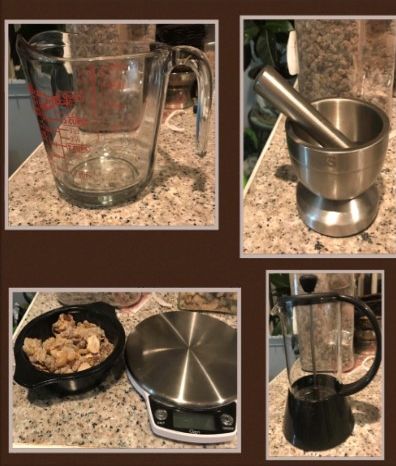
 Infusing the whole resin Here are step-by-step instructions on how to infuse resins. This herb infusion can be used for any recipe that requires a carrier, such as lotions, salves, or aromatherapy blends. Equipment List ¨ 1 oz. resin ¨ 8 oz. carrier oil ¨ 16 oz. Pyrex measuring cup with handle (as pictured) ¨ large pot ¨ mortar and pestle or coffee grinder (if you want to turn it into Powder instead of using whole resin) -If you want to do powder than put the resin in a plastic bag in the freezer 24 hours prior to grinding it. ¨ cheese cloth or French coffee press ¨ scale with measurements in ounces and grams ¨ small measuring cup ¨ 12 oz. Ball jars with covers Carrier Oil First you will need a carrier oil. Some of the best carrier oils are jojoba oil, fractionated coconut oil, sesame oil, olive oil, or sunflower oil. If you do not have one of these, you could substitute any oil that contains fatty acids except olive oil, which can turn rancid in the sun. My personal favorites are jojoba oil and fractionated coconut oil. I find the resins mix really well in these two oils, but you can use any oil as stated above. Step 1—Decide which resin you want to experience first. Step 2—Use the scale to measure out 1 ounce of resin. Note: Make sure the scale measures in grams and ounces. Step 3—Place 1 ounce of the resin and 8 ounces of carrier oil in a 12 ounce glass sterile Ball jar. Note: A Ball jar can stand heat and will not break when it sits in boiling water. Step 4—Cover the jar with plastic wrap. Note: The plastic wrap is necessary because the resin is very sticky. Without the plastic wrap, you are never going to be able to open the jar. I know, because I made that mistake and found there was no way to get the jar open without breaking the glass. Step 5—Put the lid on the jar over the plastic wrap. Step 6—Place the closed jar in the sun for a full 12 hours. Note: Place the jar outside if it is warm, or by a window where the sun is streaming in. Step 7—After 12 hours, put the jar in a cool dry place. Step 8—Shake it every day. Step 9—The jar has to sit for a total of 60 days. Step 10—On the 15th day of the month, or preferably when the moon is full, place the jar in the moonlight for 12 full hours, from dusk to dawn, to collect the energy and the light of the moon. This is not necessary, it just gives it a more mystical touch. Step 11—For the remainder of the 60 days, let the jar rest in a cool, dry, dark place. After 30 days open the jar and smell it. If you do not smell a strong scent from the resin it definitely needs more time. I find 60 days is better than 30 days. The longer it infuses the stronger it gets. Step 12—After 60 days, strain the contents of the jar through a French coffee press or a coffee filter. Note: I like using a French coffee press as you see in the picture because I do not want the oil strained too fine. I like it a little thicker. . As long as the jar did not get any moisture in it– should stay for at least a year in a cool dark place. Step 13—Pour the remaining liquid into the other Ball jar and close it. Note: Put plastic wrap or wax paper in between the lid and the jar, to make a tight seal. Save the sediment in a small jar. Add a little bit of oil to keep the resin in the sediment from getting too hard and sticky. You can use the sediment in body scrubs and soaps. Scoop the sediments and put them in a small glass or plastic pet jar with a lid but put a little bit of the carrier oil in the jar so the resin does not dry out. This is how the jar should be covered 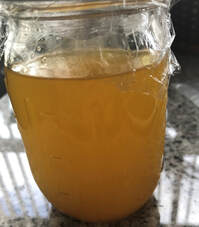 These are the sediments left over. You can save them for making sugar scrubs or soap 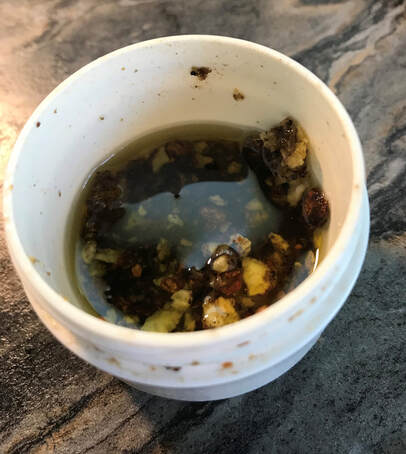
2 Comments
 Frankincense and Cancer
There are so many theories out there that Frankincense Essential Oil can cure cancer. So many companies are alluding to this fact. There is a problem about all this. There are 18 species of Boswellia Frankincense Trees to date and each one has totally different therapeutic properties. The resin from these trees is what is distilled to make the essential oil. The essential oil has some very good chemical properties in it but what is being researched and experimented on is the Boswellic Acid that is inside the resin itself. The majority of the percentage of Boswellic Acid is in the aftermass that is leftover after the resin is distilled. It does not come through the distillation because it is too heavy a molecule so it is not in the Essential Oil at all. Boswellic acid is made up of pentacycle triterpene molecules. These molecules are very anti-inflammatory. There is some evidence that some of these Frankincense resins can shrink cancer cells but there are no long term studies yet on humans that show it completely shrinks and destroys the cells nor if they grow back. If you try using the resin there is no guarantee of anything, you are basically doing this at your own risk. We suggest always check with a doctor first before doing anything. I have included links that you can check out yourself that explains all that I am telling you. Tisserand Institute has a great article about this https://tisserandinstitute.org/frankincense-oil-and-cancer-in-perspective/ This one is on Boswellic Acid Boswellic Acid. (n.d.). In Wikipedia The Free Encyclopedia. Retrieved from February 24, 2019 https://en.wikipedia.org/wiki/Boswellic_acid This is another interesting one. Schmiech, M., Lang, S., Werner, K., Rashan, L., Syrovets, T., & Simmet, T. (2019). Comparative Analysis of Pentacyclic Triterpenic Acid Compositions in Oleogum Resins of Different Boswellia Species and Their In Vitro Cytotoxicity against Treatment-Resistant Human Breast Cancer Cells. Molecules, 24(11), 2153. Retrieved April 5, 2019 https://www.mdpi.com/1420-3049/24/11/2153?fbclid=IwAR1bCI1cRT4LF8QafOf9sxnMvlcigEZ SM4NpqkCBughTuzXsyPIFy9L1Lo  Let’s talk more about sustainability. Climatic changes, increasingly unpredictable rainfalls and wildfires have ravaged parts of Africa. Frankincense resins throughout the world, as with many medicinal plants, are threatened by their ever-growing popularity, over-harvesting, and destructive natural forces.
The rise in popularity of essential oils has had the most significant effect on the natural population of these trees. Local harvesters try to meet large-scale corporate demands from the essential oil companies; but harvesting much more than the trees can handle jeopardizes the trees’ well-being. Once the tree is weakened, this makes the trees vulnerable to disease and insects, which can destroy them. Frankincense trees are becoming endangered in certain areas of the world. In Oman recently there has been a major typhoon which destroyed many of these trees. Before this, abusive tapping was a major problem but the government and several organizations have stepped in to ensure this does not happen again. There are rumors that the trees in Somaliland and Somalia are endangered. This is not true. I speak to many farmers, distillers and those very concerned about these trees and all of them have told me the trees are doing just fine and are in fact abundant. You have to understand, the majority of these trees grow in remote places in Somaliland and Somalia nowhere near villages. It takes a lot to even get remotely to these remote trees. You also have to understand this is the livelihood of these people. Frankincense trees and their livestock. Most harvesting families treat the trees extremely carefully allowing them to rest in between tapping. Without these trees the people would surely not survive. Recently, there have been a few vocal stakeholders who are trying to convince the world that blockchain technology is the way to go in Africa pertaining to the trees. Some Frankincense companies are using this in their marketing, which they say will further the timely keeping of how and when these trees are tapped and how much resin comes from each tree. What is a blockchain? A blockchain is a digital ledger of transactions that contain information and data and distribute it across a network. Time based data is chained together to verify that it has not been changed. So why does this concept not work where these trees grow? IT infrastructure is basically non-existent where these trees grow and there is no real electric grids in these remote places. Most of the people recharge their phones from their cars or diesel generators or some small scale solar panels. The block chain data needs to be uploaded to the network and sent back to a server that will hold the information. The data is only as good as the person who is entering it. Do you really think the frankincense harvesters, the majority of whom don’t even use email nor have a sophisticated computer, and have spotty wireless service are going to adopt this new technology successfully? Not to mention the amount of work and cost of maintaining the servers, the software, the training, and the immense amount of electricity used for this process. Do you think the harvesting communities have the money to implement this? Of course they don't, which means the control of their natural resource and livelihood will not be theirs, but those who have the means (i.e. typically non-Somali owned companies who profit off frankincense). The farmers have been doing fine all these years with their traditional methods of harvesting. To bring this into a country for a company’s wealth gain is not helping anyone except for that company's bottom line. . This just shows how some companies are exploiting the market for their own self and accumulating money for themselves. This is not a real solution to sustainability, it's smoke and mirrors, in my opinion and other intelligent people I have spoken with feel this will not work at all. And then there is the other manufactured problem I've seen lately. Some people are telling you to purchase resin and or essential oil from only Kenya because they feel the other resins from other regions are not sustainable. As I said above this is not true. While Kenya does grow different Frankincense resin, considered sustainable because the trees are not tapped, if you purchase your resin from only one place those trees will wind up being endangered and so will the essential oil that comes from these trees. My feeling on this? I am a clinical Aromatherapist and I have been taught to purchase my essential oils “all plants including Frankincense” for a therapeutic reason. Yes I sell Frankincense Essential Oils, most are from the resin I sell and in very small quantities and those I do purchase I make sure they are coming from good honest farmers that grow these trees. I do not on one hand tell you to purchase only from one country, tell you not to purchase essential oils at all, and on the other hand distill larger quantities of resin and sell the essential oil. This is hypocritical! I am not telling you to never purchase essential oils. I am telling you to use your essential oils for a purpose only. If you are looking to make your house smell nice or even looking for the medicinal properties of the essential oil, use a few drops only in blends, or better yet take a piece of resin which is not so highly concentrated , and burn it. You will get the same effect and you will be using so much less. It takes 1 pound of resin to make approximately 15 milliliters of essential oil. I know from firsthand experience. I have distilled resins and this is basically what I found it yielded Also: Buyer Beware. When you purchase resin please make sure you get them from a reliable source. It MUST have the full Latin name on the label. If you are getting it from a bin, then the seller has to know which resin and grade it is. If he does not- do NOT purchase it. Unfortunately some merchants put stones and plastic mixed in the resin and you have no idea if you are getting the real deal. When you get it home and try to burn it this is the only way you will know. If you make an herbal infusion thinking you have the “real deal” and you do not realize this, you can get a major rash on your skin. OK end of rant. Some of my information is taken from my dear friends at Boswellness - you can read all about block chains in their full article here: http://www.boswellness.com/2021/08/19/blocked-chains-solutions-and-distractions/ 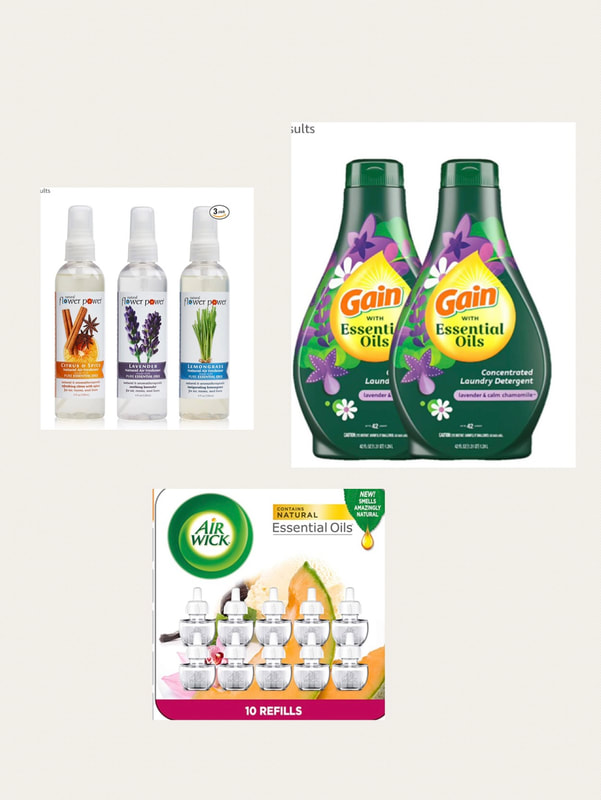 I do not get it, i am seeing essential oils everywhere, in detergents, air fresheners, cleaning agents, oh my. This is terrible. Plants were put on earth for a reason. The essential oils that come from the plants Have a purpose, a therapeutic purpose And should be used only when necessary For a particular problem. Commercial companies are taking this a bit too far. There is no reason to put an essential oil in a detergent. If you wash your clothes properly They will come out clean and fresh. If you have the ability to hang them on a clothes line like they did hundreds of years ago, they will smell sweet and fresh Don’t get me started on Commercial air fresheners. Most people today use commercial air fresheners to make a house smell nice. Guess what? if you keep your house clean, Your house will smell nice. If you really want to use something to give your house a pick me up, then burn some resin. Here you are using the raw material and you’re only using a piece not the concentrated essential oil that took pounds of the plant material to make your couple of drops in the air freshener. This is a total waste to use essential oils this way. This is why so many plants are endangered. Over abuse! Most people do not realize what it takes to make the essential oil. To produce a single pound (16 oz ) of essential oil, enormous quantities of plants are required: 10,000 pounds of rose petals, 250 pounds of lavender, 6,000 pounds of Lemon Balm , 1,500 lemons, get my drift? To put essential oil in useless products is a waste Of our environment and the Eco system. Besides it being a waste, It can be very harmful. Some people are allergic to certain essential oils. Throwing them in the air as a freshener or putting them in a detergent, Can actually wind up making you sick. When you put them in a detergent it is getting into the clothing and if you are on certain medication and the clothing is on your body it is getting into your pores and depending on the medication and essential oil that’s in that detergent, can make you extremely sick. There is no problem as an individual person to make a do it yourself air freshener or hand soap, because you are limiting the quantity that is going in and if you are an aromatherapist you know basically which oils to use and when. Again You should be using the essential oils for a purpose And you should be consulting a qualified professional aromatherapist, like myself, who understands the chemical make up of these oils and has had at least 200 hours of qualified education and years of experience learning and working with these oils correctly and safely. So please the next time you pick up a bottle of detergent or an air freshener in a store think about everything that I have said here before you make your purchase. If we stop using and abusing these plants they might still be around for future generations. 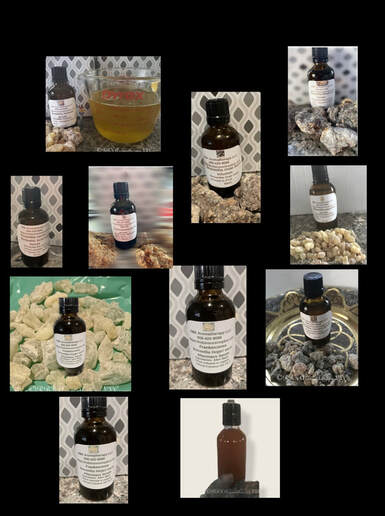 Frankincense Herbal Resin Infusions
When we infuse these resins in a carrier oil the recommended ratio is 1:8. One ounce of resin to 8 ounces of carrier oil. Which carrier Oil? If you want to pull out as much of the therapeutic chemicals in the resin, I suggest using fractionated coconut oil because it is a very “light” oil. You can use any other oil that is light also. Sunflower is a light oil for an example. Frankincense Boswellia carteri is excellent for one’s skin. So to really pull out all its therapeutic properties I like to use Jojoba oil because it is wonderful for your skin so you are getting the best of both worlds. The combination of resin and oil should be placed in a glass container like a Ball Jar that is heat resistance and quite thick. You may use the whole resin or make a powder from it. Using the whole resin you just want to infuse it longer for at least 60 days. The powder which absorbs faster into the carrier oil for at least 30 days. I actually like using the whole resin but if you are in a hurry the powder is just fine. Understand the longer it sits in the carrier oil, the stronger it will get- powder or whole. You can shorten the length of time a bit by putting the resin and oil in a double boiler for about 30 minutes, then continue with the method above. It should be covered with a plastic wrap because resin is gummy and sticks to EVERYTHING and if you do not use a plastic wrap before you put the top on, I promise you will never open this jar again. Place the jar in a cool dry dark place and shake it every few days to mix it all up. If using the powder method, open it up after 30 days and smell it. If it totally jumps out at you and you smell strong resin, then you can strain it. If not add another couple of weeks. If using the whole resin open it up after 60 days, if you still do not smell strong resin, then leave it in for a few more weeks. Remember the longer it sits the stronger it gets. Once done, strain it in a cheese cloth or Coffee French Press. I like the French press because it takes out any large pieces and leaves the good stuff. Infused resin is normally quite thick so if you use a coffee filter you will be straining for hours and most of it will sit in the filter which is a total waste. When strained as I said the infusion not only is thick but it is quite strong. When you pour it into another bottle you actually will cut it a bit by adding more carrier oil. For example my bottles are 50mls that I sell. When you purchase a bottle from me and you are using it straight I advise you to put it into another bottle and add half straight carrier oil and half of the infusion. Because it is so strong. You can also use it mixed with another carrier oil and add an essential oil to it. So my 50ml bottle goes a very long way. The only time to use it straight, depending on the resin you use, is if it is for an acute problem and not for a long period of time. I make herbal infusions of almost all the resins I sell. I also given it to you at a very affordable price. All my resins are top quality so you know you are getting the best and the carrier oils I use are all natural and organic. Try each one out and see which one works better for you. Some of my clients have told me they purchase my infusions first besides getting the resin they are made from, because they do not want to wait 60 days for theirs to be ready. They purchase my infusions so they can use them now until theirs are ready. They are in my Herbal Infusions category. 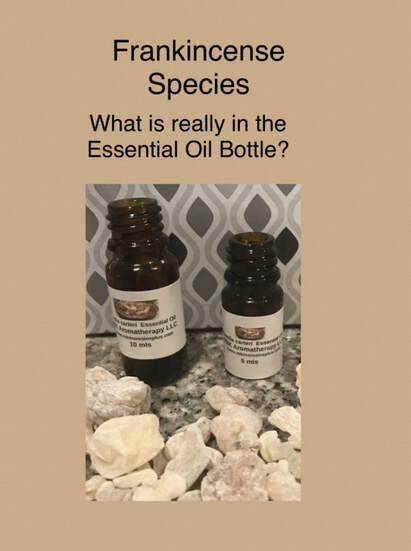 I have seen many posts and comments on Facebook about purchasing Frankincense essential oils, so what is all this hype?
First let me tell you, most aromatherapists have no clue which species is which because we never really learn this in our certification courses. We skim the resin and learn more about the therapeutic properties of the essential oil. It is so important to learn where the essential oil comes from. There are 43 species in the Boswellia family, about 18 of them are in the Frankincense species. Each Tree contains resin that is used for so many different therapeutic properties. In the aromatherapy industry the “known” one that we learn something about is mainly Boswellia carteri (btw thee name used in Somaliland is carteri not carterri nor carterii), Boswellia is the Latin name, Frankincense is the common name. To type it Boswellia carteri is spelled “Boswellia” italicized and first letter is capitalized. “carteri” is lower case c and also italicized. We learn that it balances the mind and can be used for certain inflammations. But in Somalia and Somaliland where it grows it is mostly used for skin conditions and to ward off sand flies and mosquitoes. It is also used to burn to get rid of icky smells from cooking fish. This part we do not learn. The same use is for the essential oil. The essential oil is the part that when the resin is distilled, the oil inside the resin comes out and is separated from the water which is then called the hydrosol. While we are on Boswellia carteri, there are actually 3 grades of this resin. One with the bark but very small pieces 3rd grade) , One with the bark but bigger pieces (2nd grade) and one totally without the bark (1st grade). People ask how come some companies sell this essential oil for so much money? A 10 ml bottle of the essential oil can go for $10 (this would probably be 3rd grade) , $25 (2nd grade) as high as $50 (first grade) or even higher if it is double distilled. Double distilled is taking the 1st distillation of the resin and putting it back into the still, adding more resin and doing another distillation. This is a long tedious process and you can wind up with a much stronger essential oil so of course the price tag is higher. I have seen a 10 ml bottle of Boswellia carteri double distilled go as high as $100. Many of the companies that sell this oil in will purchase it from a distiller who distills 2nd grade because unless you know about this resin, the consumer will have no idea which grade it is and the company can keep the price down lower. Let’s face it 1st grade Boswellia carteri resin is more expensive than 2nd grade especially if you are purchasing liters of it to sell. Now a lot of companies are doing something which I feel is rather dumb. They are combining 4-5 Boswellia essential oil species together and calling it the “Miracle Frankincense” Umm NOT. Some are mixing essential oils that have nothing to do with each other. We also do not know how many drops of each are going into the bottle. One company is mixing Boswellia carteri, Boswellia sacra, Boswellia papyrifera and Boswellia frereana. OK so Boswellia carteri is really for skin conditions as I mentioned earlier, Boswellia papyrifera is for meditation and can be used for anxiety issues. Boswellia frereana is for pain issues. And Boswellia sacra, umm which one? There are 4 grades of B.sacra but it can be used for pain issues. This is like mixing apples and oranges. If you are going to blend together at least blend the ones that complement each other. The other problem is we have no idea how many drops of each are in the 10 ml bottle so we have no idea if we are even getting the real deal of usage. To really learn about these trees and the resins they produce I suggest you purchase my book, Frankincense Resins The Journey and Beyond. I take you through each resin and what it is used for. This way you have a way better understanding if you want to purchase the resins or the essential oils. 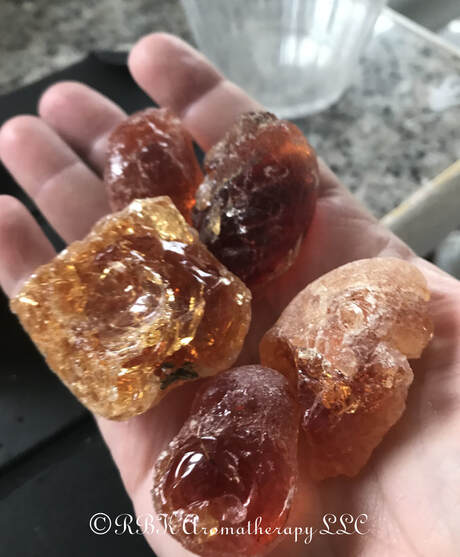 This is a very interesting Resin. It is a water-soluble gum derived from the hardened sap of the acacia tree species. It grows mostly in Sudan and throughout the Sahel, from Senegal to Somalia and Somaliland . Gum Arabic is a complex mixture of glycoproteins and polysaccharides predominantly consisting of arabinose and galactose. It is soluble in water, edible, and used primarily in the food industry and soft-drink industry as a stabilizer. It is also used as a binder for paint production and cosmetics. Definition is coming from Wikipedia here: https://en.wikipedia.org/wiki/Gum_arabic When I wanted to purchase this I wanted to find out traditionally what it’s used for in Somaliland. I spoke to some of the farmers that harvest it. They told me it is excellent for digestion and also lowers blood sugar and cholesterol levels and that’s what they used it for. Of course, I had to research this further and I found some interesting facts and I put some of the websites here that I researched it in. There have been several studies it shows that it does lower blood sugar and can also lower cholesterol levels and helps with those with IBS. Here are some interesting links to studies about this resin: Metabolic effect of Gum Arabic (Acacia Senegal) in patients with Type 2 Diabetes Mellitus (T2DM): Randomized, placebo controlled double blind trial Effect of Gum Arabic (Acacia Senegal) supplementation on visceral adiposity index (VAI) and blood pressure in patients with type 2 diabetes mellitus as indicators of cardiovascular disease (CVD): a randomized and placebo-controlled clinical trial The Health Benefits of Acacia Fiber or Gum Arabic Effect of composite yogurt enriched with acacia fiber and Bifidobacterium lactis I asked the farmers how do use it and they melt it in warm water and once it dissolves, put it in the refrigerator or a cool place and take a teaspoon of it in juice or milk daily. And they claim it really works. It does work because I experimented with it and my AIC has gone down a lot. I am pre-diabetic and have been maintaining it with diet and exercise, but since I am getting older it is creeping up on me. So I decided to test it out. I am finding my AIC numbers are going down. They went from 6.9 to 6.6 in 3 months of using this resin. Right now it is holding at 5.9. This is the lowest it has ever been and I have been since I was diagnosed 20 years ago. It has not helped my cholesterol levels but I am told those who are using it has helped a bit. It also helps with gas in one's stomach because it is a binder, and those who have IBS. Since using this resin my bowl movements have been much better. I have IBS myself and I am finding it is helping with this too. How to use it: How does one use it? You can either use the whole resin I sell and put 1 ounce of the resin in 6 ounces of hot water in a Ball Jar. Mix it up and once it is almost completely melted put it into the refrigerator. It should last in there about 2-3 weeks. Every day put a teaspoon of the liquid into something hot. I put it into the coffee. Start once a day then once you find you can handle it you can do it 2x a day or do One tablespoon once a day. It has no taste nor any smell so it basically can go into anything that is a liquid. I sell the resin and you can get it here 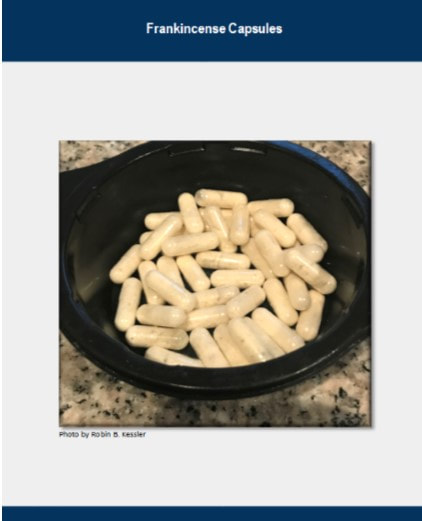 Frankincense Resin may be ingested as long as you use some common sense. The resins are the natural material from the tree and not concentrated like Essential Oils are.
All of the resins are good for inflammation, calming and balance. If you are going to try this you are doing it at your own risk because everyone's body is different. Also Frankincense resins do not cure anything. There are not enough long term studies to prove this. I suggest you use 00 capsules because they are small and easy to swallow. You may take a half of a teaspoon and wash it down with a full glass of water but I do not suggest this because it can get caught up in your teeth. Resins are quite gummy and can stick to your teeth and actually pull out fillings or caps. Using a capsule and washing it down with a full glass of water it does not break down till it hits your stomach and your stomach acids should break it up and the rest, your liver will take care of. You need to make the resin into a powder to do this. You should freeze the resin first then grind it down. You should purchase 00 capsules made out of vegetables so it dissolves more easily. Please check with your physician before doing this. Most physicians have no clue about resins but it is better to check anyway. Also a few resins have contradictions with prescription drugs like Boswellia serrata which has a problem with those on Heart medicine and Blood Thinners so if you are taking these drugs please do not use this one. Boswellia sacra any one of them, would be a good starting point, it also smells good. Hojari "Green" sacra is very strong so I would use this one if there is real severe pain. Boswellia superior sacra is a good one for any type of inflammation in the body like muscle pain or joint pain. Boswellia brown sacra is a good one for maintenance once the inflammation is under control because it is not as strong as the other ones. I would start with one capsule a day to make sure you have no reaction, like stomach acid, cramps or diarrhea. After a week you can go for 2x a day but not more. I have found with those trying this if you increase it they were getting stomach problems. Try to take it after you eat breakfast and dinner with a full glass of water. I do not recommend to try this on an empty stomach. It may take up to a week or two before you notice any difference. I am using it for the pain I have in my foot and it seems to be helping. I have less swelling and I do not feel like I want to cry every time I put my foot down. I have clients that have used it for arthritis in their knees and they found after about 1 month they can actually walk with less pain. This is what one client told me the other day in the Frankincense Group I run. "I would love give a huge shout out to Robin!! She has been such a great help to me, for my anxiety and my pain. I have had pain in my hands for about 6 months now. I have tried about every cream and essential oil mix I could make with not much help. I love to snowmobile, but have been unable to for long periods of time. Until Sunday. Robin helped me make my own capsules with her superior sacra resin. It worked!! I was able to go riding and had no pain in my hands like the other times!! I was actually able to enjoy the ride and the views! THANK YOU Robin Schiller-Kessler CA!!!!" Barbara M. This is not a substitute if you have a life threatening disease so please use with caution and again talk to your Health Practitioner first before trying this. I sell all the different sacra resins and you can get them here. Explanation of the Mass that is left over from Distillation of 4 resins that were tested. Frankincense Species Boswellia papyrifera, Boswellia serrata, Boswellia sacra, Boswellia carterii dissertation by Michael Paul (A Qualitative and Quantitative Approach by Chromatographic and Spectroscopic Methodology ) Saarland University Saarbrücken, Saarland, Germany 2012 Explained to me by Hubert Marceau (Most of the technical terms and writing in here are Hubert’s words and I had his full permission to use them) We know that Boswellic Acid in these 4 resins does not go into the distillation because the molecules in the Ba are too heavy to pass through but what else stays back if any? I went to Hubert Marceau because he is a known scientist and chemist and knows so much about essential oils for my explanation. It is too long an explanation to put in here so i made a pdf of it that you can download and read further down. Studies have shown that Boswellic acid may reduce certain skin cancers. While there are no long term studies as of yet, when using it for this purpose you do it at your own risk. here are some studies on this subject Anti-inflammatory and anti-cancer activities of frankincense: Targets, treatments and toxicities https://pubmed.ncbi.nlm.nih.gov/32027979/ Acetyl-11-keto-β-boswellic Acid Inhibits Precancerous Breast Lesion https://pubmed.ncbi.nlm.nih.gov/32273767/ I am selling the Boswellic acid extract powder that comes from Boswellia sacra resin A few of my clients are using infusing it in jojoba oil and using it when they have radiation for breast cancer. Radiation tends to really burn the skin on one's breast. Although there are creams and lotions for this that the doctor will prescribe, some of them do not work. I was asked if I could make something that might help take down the burn a bit. I made the infusion for this particular client and she told me after a few days it has been working better than anything she has been using.. So you see it has many uses. I sell the infusion and also in a lotion on my website. I gave it to a few people to test it for me, these are two for an example: "My morning routine is waking up and washing my face. I did a quick water rinse first then started with the lotion. I applied it to my cheeks first in a circulating motion and then moved onto my forehead, down my nose and finally my chin and jawline . This circular motion lasted about 1- 2 minutes. I then let the lotion rest on my face for another 1- 2 minutes while brushing my teeth. I took a disposable napkin( kleenex rand makes them and they are a little thicker than a tissue) and wiped my face clean of the lotion while avoiding my eyes. This took a little bit of patience since the powder is acting as an exfoliant, so the powder particles stay on your face little. A little extra wiping might be necessary but totally worth it! My face felt very clean and refreshed. I was able to rub in any remaining lotion I felt left on my skin. I felt the bosweilla powder mixed with lotion acted as an exfoliant and removed the excess oil and dirt from my pores. It was very pleasant. As I kept using this lotion morning and night my skin became more supple. It had a very slight glow to it and my darker spots under my eyes have been getting lighter. I feel from day 1 to day 7, my face has a more youthful appearance". Miranda M "I love the ba! I added it to a lotion. Every day I massage it on my face and wipe it off. My face feels amazing! From wearing my mask so often it used to be so dry. Now it's back to being soft. I use it on the bottom of my feet also. The dryness of my heels is almost gone after 2 weeks of use. I added some ba to hemp oil. It totally dissolved after a week. I've been adding it to some dark spots on my arms. They seem to be lightening up after 2 weeks. So easy to mix and use. Will be getting more for sure". Barbara M 
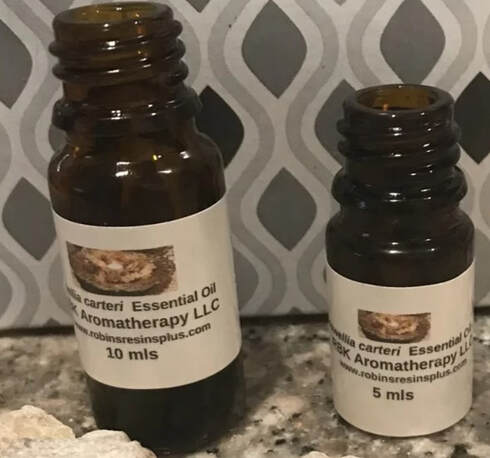
TThere is an interesting Frankincense essential oil some retail stores are selling. They call it the “wonder” oil, They claim mixing a bunch of different species of resin will make you feel better. Well you see this is a problem because each species has a different therapeutic purpose. It is like mixing Apples and oranges. Boswellia cateri is good for the skin, while Boswellia frereana good for pain, then i saw Boswellia serrata mixed in while it is good for pain it has contradictions if on blood thinners or taking heart medicine. Boswellia papyrifera is for meditation and calming, and is some can create hallucinations. This is a terrible mix And mostly a marketing tool. How many drops of each do you know is it in the bottle? These companies are not going to tell you that part. So you have no idea exactly what you’re getting. And you are mixing pain, Something for the skin and then anxiety and calming oils together. This to me does not work. As an aromatherapist, I mix blends together but it is done for a purpose. So let’s say you have an anxiety problem. We would take a few plant oils And put them together that is solely for anxiety. I might mix Boswellia neglecta which is excellent for stress, calming and anxiety and mix it it with sweet orange, and maybe one more like petitgrain. for pain, i would do Boswellia frereana or sacra and mix it with balsam copaiba or plai For skin conditions i would mix Boswellia cateri with carrots seed oil or manuka oil. All these oils go together they for a specific reason, Also because I am in aromatherapist I know how much of each oil I would put in a bottle especially if I’m using it for myself or a client. Mostly I would use them totally separately by themselves. Boswellia carteri Is wonderful or any type of skin condition, Boswellia frereana and sacra Is wonderful for pain and Boswellia neglecta for calming, stress and anxiety. You really do not have to mix them with anything else they can be use solely by themselves also. The other problem is what works for one might not work for another. So it is way better to try one first before you go to another. Having them all mixed together you have no clue what is working for you. So please do not get caught up into marketing tools that say that this product is the all all. There were too many in the mix to do anything for a specific reason other than maybe smell nice. I sell the 3 you see in this picture. At least you know you’re getting the benefit of each oil. And if you are not sure which one to get, I am selling them in one mill bottles for you to try to see which one works. . https://www.robinsresinsplus.com/store/c11/Aromatherapy_Products_including_Frankincense_Essential_Oils.html#/ 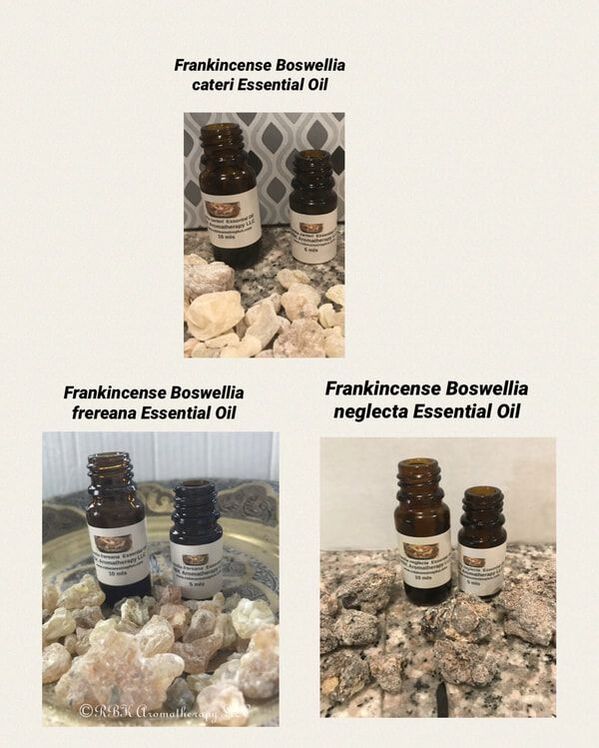 |
Robin B. Kessler, CCA
I am a Certified Clinical Aromatherapist who specializes in Seniors and Hospice. My passion is also these resins and support those who keep the sustainability of the all plants. Archives
April 2022
Categories |
||
 RSS Feed